มี paper ตำนานอันนึงจากปี 1981 ของ McClelland ชื่อ “How Your Brain Finds a Memory” ที่อธิบายว่าสมองเราหาความทรงจำที่คุ้นๆ เจอ แล้วตอบออกมาได้ยังไง ผมเลยลองเอามาทำ visualize ดู แล้วพบว่ามันไปเชื่อมกับเรื่องการสร้าง second brain ได้สวยมากเลยครับ
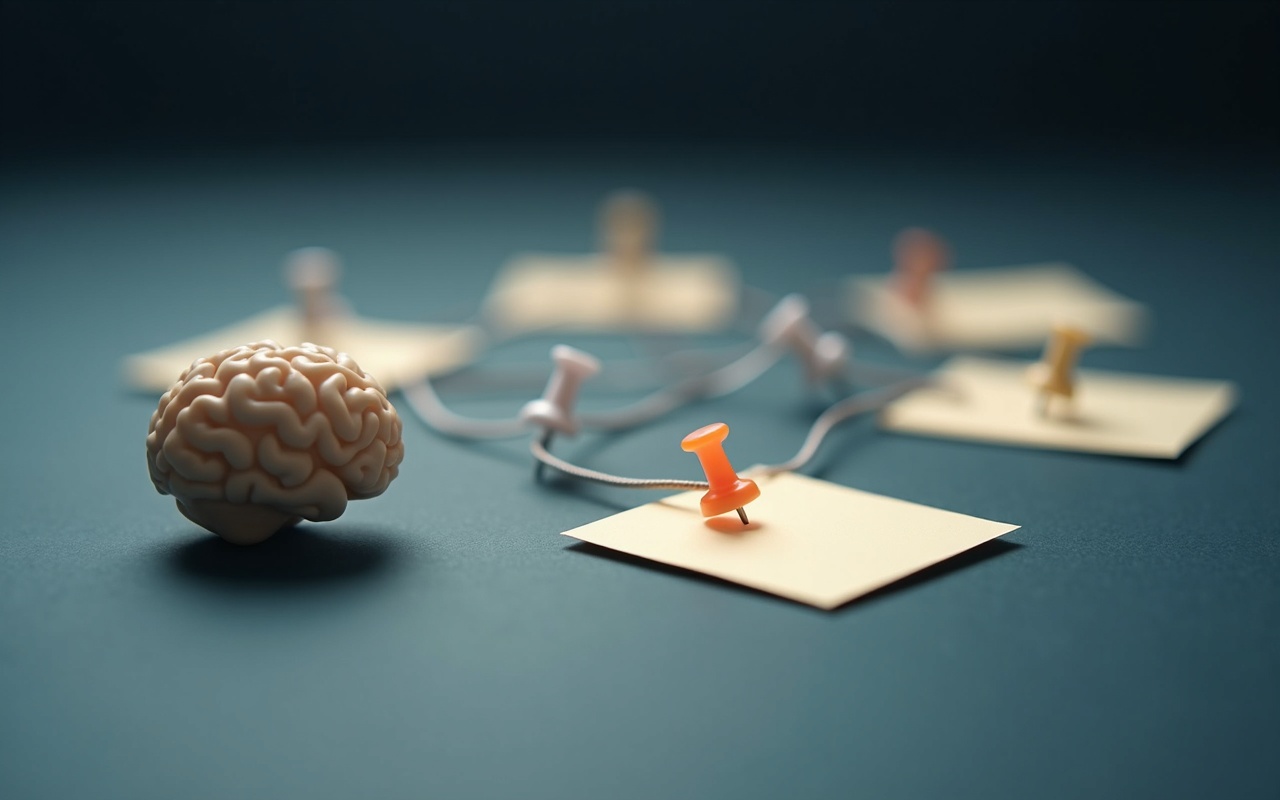
หลักการมันคือโมเดลที่เรียกว่า Interactive Activation & Competition (IAC) หรือบางคนรู้จักในชื่อตัวอย่าง “Jets & Sharks” ลองนึกภาพว่าในหัวเรามีหน่วยความจำเป็นโหนดเล็กๆ เต็มไปหมด เช่น ชื่อคน อายุ อาชีพ กลุ่มที่สังกัด พอเราให้ clue บางอย่างเข้าไป เช่น “คนนี้อยู่แก๊ง Jets อายุ 20s” โหนดที่ตรงกับ clue จะถูกจุดให้สว่างขึ้น แล้วมันก็จะส่งสัญญาณไปกระตุ้นโหนดเพื่อนที่เชื่อมกัน พร้อมๆ กับกดโหนดคู่แข่งที่ขัดกันให้เงียบลง
สิ่งที่สวยคือสมองไม่ได้ค้นแบบ database ที่ต้องตรงเป๊ะทุก field มันทำงานแบบแข่งกันกระตุ้นและกดทับกันไปเรื่อยๆ จนระบบนิ่ง แล้วคำตอบที่ “เข้าท่าที่สุด” ก็โผล่ขึ้นมาเอง สูตรคร่าวๆ ของมันคือ ค่า activation ของแต่ละโหนด = สัญญาณ probe ที่เราป้อนเข้าไป + (ตัวคูณ excitation คูณผลรวมของเพื่อนที่ active อยู่) − (ตัวคูณ inhibition คูณผลรวมของคู่แข่งที่ active อยู่) ในเปเปอร์ใช้ค่าประมาณ excitation 0.05, inhibition 0.03 และ probe 0.2 เป็นต้น
ทีนี้พอมามองเรื่อง second brain ผมว่ามันคือบทเรียนเดียวกันเป๊ะ คือคุณค่าของโน้ตเราไม่ได้อยู่ที่ตัวโน้ตเดี่ยวๆ แต่อยู่ที่ “การเชื่อมโยง” ถ้าโน้ตเราเชื่อมกันดี วันนึงเราจำได้แค่ clue นิดเดียว เช่น คำๆ เดียว ระบบมันก็จะพาเราไปเจอความรู้ทั้งก้อนที่เกี่ยวข้องได้เอง เหมือนสมองที่จุดโหนดเดียวแล้วลามไปทั้งเครือข่าย แต่ถ้าโน้ตลอยเดี่ยวๆ ไม่เชื่อมกับอะไรเลย ต่อให้เก็บไว้ก็แทบไม่มีทางถูกดึงกลับมาใช้
ยาวไปไม่อ่าน สรุปก็คือ:
- สมองหาความทรงจำด้วยการจุด clue แล้วปล่อยให้โหนดที่เกี่ยวข้องกระตุ้นกันเอง ไม่ใช่ค้นแบบตรงเป๊ะทุก field
- ตัวกระตุ้น (excitation) ช่วยดึงเพื่อนที่เกี่ยวข้องขึ้นมา ส่วนตัวกด (inhibition) ช่วยตัดคำตอบที่ขัดกันออก
- second brain ที่ดีก็ทำงานแบบเดียวกัน คุณค่าอยู่ที่การเชื่อมโยงระหว่างโน้ต ไม่ใช่จำนวนโน้ต
- เพราะงั้นเวลาเก็บความรู้ ให้โฟกัสที่การ link โน้ตเข้าหากัน clue เล็กๆ วันหลังจะพาเราไปเจอของทั้งกองเองครับ
There’s a legendary 1981 paper by McClelland called “How Your Brain Finds a Memory” that explains how we recall something familiar from just a few clues. I built a little visualization of it — and it turns out to map beautifully onto how you build a second brain.
The idea is a model called Interactive Activation & Competition (IAC), which some people know through its “Jets & Sharks” example. Picture your head full of tiny memory nodes: people’s names, ages, occupations, the gangs they belong to. When you feed in a clue — say, “this person is in the Jets and in their 20s” — the nodes matching that clue light up. They then send signals that excite their connected neighbors while suppressing rival nodes that contradict them.
What’s elegant is that the brain doesn’t search like a database where every field has to match exactly. It just keeps exciting and inhibiting nodes back and forth until the system settles, and the “best fit” answer surfaces on its own. The rough formula: each node’s activation = the probe signal you feed in + (an excitation factor times the sum of its active friends) − (an inhibition factor times the sum of its active rivals). The paper uses values around excitation 0.05, inhibition 0.03, and a probe of 0.2.
Now bring this back to the second brain — to me it’s the exact same lesson. The value of your notes isn’t in any single note; it’s in the connections. If your notes are well linked, then one day you only need a tiny clue — a single word — and the system walks you to the whole cluster of related knowledge, just like a brain lighting up one node and having it spread across the network. But a note that floats alone, connected to nothing, will almost never get pulled back out no matter how carefully you saved it.
Too long, didn’t read? Here’s the gist:
- The brain finds memories by lighting up a clue and letting related nodes excite each other — not by exact-matching every field.
- Excitation pulls up the relevant neighbors; inhibition cuts out the contradicting answers.
- A good second brain works the same way — the value is in the connections between notes, not the number of notes.
- So when you capture knowledge, focus on linking notes together. A small clue later will walk you to the whole pile on its own.